Funeral Homes in New York, How They Work and What Families Should Expect
When someone dies, families are often asked to make practical decisions at exactly the moment when clear thinking feels hardest. That is one reason funeral homes play such an important role. In New York, they do much more than arrange a ceremony. They help guide families through transportation, care of the deceased, paperwork, scheduling, and final disposition, whether that means burial or cremation.
For readers in the United Kingdom, the closest comparison is usually a funeral director. The overall purpose is similar, but the process in New York is shaped by state rules, city procedures, and formal authorization steps that can affect timing, especially when cremation is involved. Understanding how funeral homes work in New York can make the process feel less unfamiliar, and can help families make steadier decisions when emotions are already running high.
What a Funeral Home in New York Actually Does
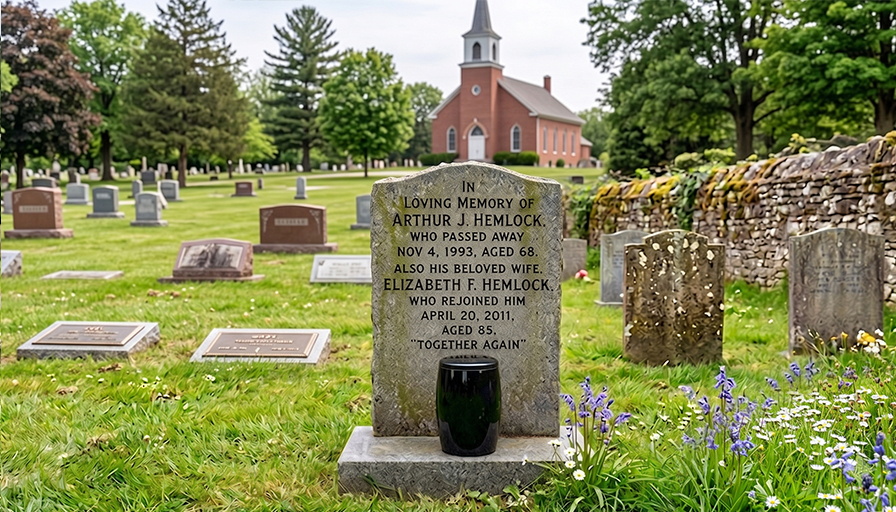
In New York State, funeral arrangements for the care, moving, preparation, burial, or cremation of a deceased person must be handled by a licensed and registered funeral director, and those services must be provided through firms that are also registered with the Department of Health. At a minimum, the funeral director typically files the death certificate, arranges transfer of the body, coordinates with the cemetery or crematory, oversees preparation, and manages the final movement of the deceased to the place of disposition.
That means a funeral home is not simply a venue for a service. In practical terms, it is the place that holds the process together. Families often first think about the ceremony, but the funeral home is also handling the less visible parts of the arrangement, the documents, the timing, the approvals, and the communication with the institutions involved. In a state as administratively structured as New York, that coordination matters.
The First Steps After a Death
The first contact with a funeral home usually happens quite soon after the death, sometimes within hours. If the death occurs at home, a medical professional or emergency responder generally needs to confirm the death before the next steps can move forward. If the death occurs in a hospital, hospice, or care facility, staff usually explain what happens next and may ask which funeral home the family wants to use. Once the funeral home has been authorized to take over, it can arrange transportation and begin the formal process.
For many families, this early stage feels disorienting because the decisions come in layers. First there is the immediate question of care and transport. Then come the larger choices, burial or cremation, public service or private gathering, immediate arrangements or a later memorial. A good funeral home does not force all of those answers at once. It helps families move through them in a manageable order.
A typical New York scenario may look like this. A family in Queens loses a parent at home after a long illness. The death is confirmed, the chosen funeral home is contacted, and staff arrive to transfer the deceased into their care. The family is then given time to gather information, speak with relatives, and return the next day for an arrangement conference. That structure is often more helpful than people expect. It gives families a framework at a moment when everything else feels unsettled.
Burial or Cremation, The Main Decision Families Usually Face
One of the first major decisions is whether the deceased will be buried or cremated. In New York, cremation is now a very common choice. In aggregated statewide data reviewed by the New York State Comptroller, cremation accounted for 51.1% of dispositions, compared with 44.7% for burial, across deaths recorded from April 1, 2019 through November 4, 2023.
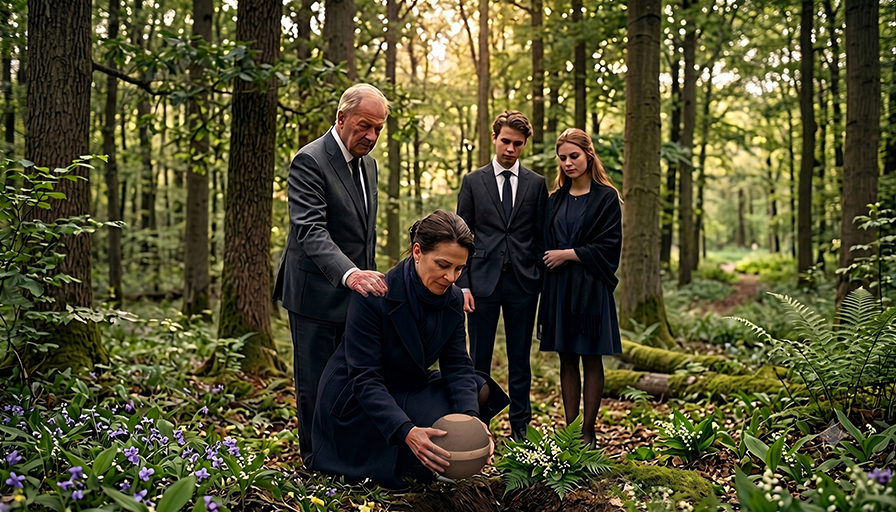
That shift matters because cremation often changes the sequence of decisions. With burial, families usually choose a cemetery, a casket, and the form of the service relatively early. With cremation, there is often more flexibility. Some families hold a traditional service first, with cremation afterward. Others choose direct cremation and plan a memorial later. Some divide ashes among relatives and choose keepsake urns for that purpose. Others keep the ashes intact in a single urn, or scatter them in a meaningful place where permitted by law with the help of scattering urns.
The right choice is rarely just about cost. It may also reflect faith, family tradition, geography, or the deceased person’s stated wishes. For international families, cremation can also make later memorial decisions easier. A family with relatives in both New York and London, for example, may choose cremation because it gives them time and flexibility to decide where and how remembrance should take place.
The Types of Services Funeral Homes Commonly Arrange
Most funeral homes in New York can help families choose among several types of arrangements, and the differences are important.
A traditional funeral often includes a viewing or visitation, a formal ceremony, and then burial. This option may feel familiar to families who want a structured public farewell. A cremation with ceremony can look similar, except the cremation takes place either before or after the service. A direct cremation is usually the simplest option, with no formal viewing or funeral service at the funeral home itself. Families sometimes choose it for financial reasons, but just as often because it suits the deceased person’s wishes for privacy or simplicity.
What matters here is that funeral homes are not limited to one model. Families can often shape the arrangement around what feels appropriate, rather than feeling forced into a single format.
What Pricing Looks Like in Practice
Cost is one of the areas where families often feel most uncertain, and most vulnerable. Federal law gives consumers important protections here. Under the FTC Funeral Rule, funeral providers must give consumers a General Price List, and families have the right to choose the goods and services they want, rather than being required to accept an all inclusive package. The Funeral Rule also requires clear disclosures about certain items and services.
That does not mean every funeral home will cost the same, because they will not. Prices can vary significantly depending on the location, the service model, staffing, transportation needs, facility use, and merchandise selected. But it does mean families should expect transparency. They should be able to see what they are paying for, ask for clarification, and compare providers if needed.
A full traditional funeral in New York will usually cost more than direct cremation, not only because of merchandise, but because of the number of services involved. Transport, preparation, staffing, facility use, hearse use, clergy or celebrant fees, cemetery charges, and printed materials all add up. Families who pause to review each item separately often feel more in control, and sometimes realize they do not need every option first presented to them.
The Paperwork Families Should Expect
This is where New York becomes more specific than many people realize. Disposition cannot simply happen as soon as the family decides. A legal process has to be completed first.
New York law requires a burial, cremation, or transit permit before a body may be buried, cremated, or otherwise finally disposed of. The funeral director is responsible for delivering the relevant permit to the place of burial or other disposition.
For cremation, there is an additional formal step. New York’s Authorization for Cremation and Disposition form must be completed and signed before remains are delivered for cremation. The form explicitly states that cremation is irreversible and final, and that a crematory may reject delivery if the authorization has not been properly completed.
There is also the death registration process itself. New York oversight materials note that disposition should not occur until a permit has been issued following registration of the death, which is one reason timing can sometimes take longer than families expect.
This is one of the most important things for families to understand. Delays are not always a sign that something is wrong. Sometimes they simply reflect the fact that legal authorization, medical certification, and registration need to be completed in the correct order.
Who Has the Legal Authority to Make Decisions
Another issue that can affect timing is authority. New York Public Health Law § 4201 sets out who has the right to control disposition. The highest priority goes to a person designated in a written instrument. If there is no such designation, the law then follows an order of priority that includes a surviving spouse, domestic partner, adult children, parents, siblings, and then others in descending order.
This matters more than many families expect. If relatives disagree, or if several people believe they should be making decisions, the funeral home cannot simply guess. It has to follow the legal chain of authority. In straightforward families this may never become an issue. In blended families, estranged families, or situations involving cross border relatives, it can become one of the most sensitive parts of the process.
For UK Families, Bringing Ashes Back From the US
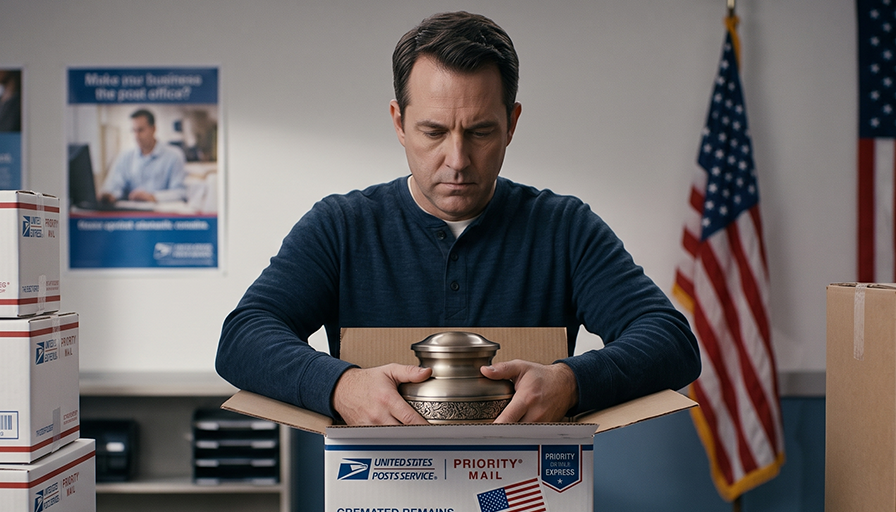
For UK families arranging or following a cremation in New York, one of the most common concerns is whether ashes can be taken back to Britain. UK government guidance says you do not need a permit to bring ashes into the UK. In most cases, you can take them with you on a plane or place them in the hold, but you should tell the airline in advance and take the cremation certificate with you.
That makes transportation possible, but it still requires planning. Different airlines may have their own handling rules, and practical questions such as the type of container, supporting documents, and timing of travel are worth confirming well in advance. Families often find this easier when the funeral home in New York is used to working with international relatives and understands that the funeral itself may not be the final step in the memorial process.
Scattering Ashes in New York, What Families Should Know
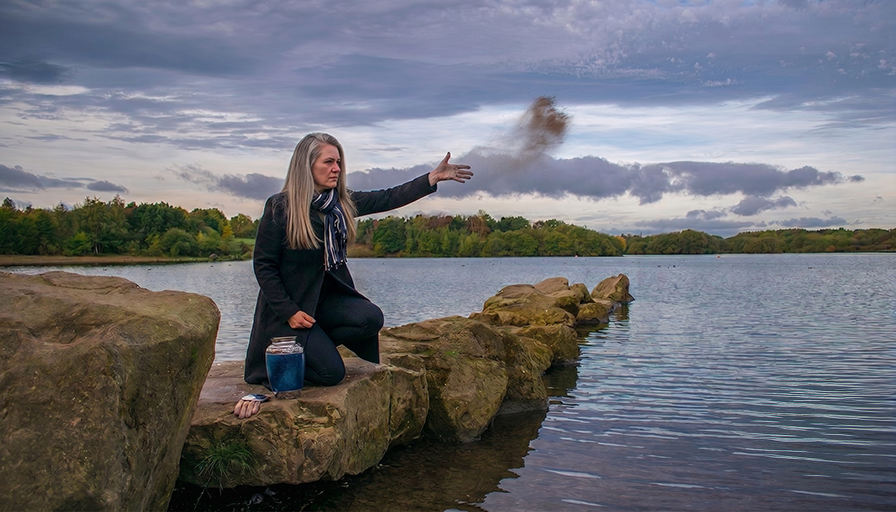
Families sometimes assume that ashes may be scattered anywhere, but that is not how New York works. Rules depend on location. In New York City parks, including Central Park, scattering cremated remains is allowed, but the remains must be fine and completely dispersed, and there are specific restrictions. They may not be scattered on playgrounds, athletic fields, hard surfaces, heavily trafficked areas, developed facilities, or in bodies of water, and families may not leave plaques, flowers, or other markers at the site.
That does not mean scattering is difficult. It simply means that families should check the rules for the exact place they have in mind, especially if the location is public, symbolic, or heavily visited. A funeral home may not always handle that decision directly, but it can often help families understand what should be confirmed before a ceremony is planned. For families who already know that a later scattering ceremony is likely, looking at scattering urns or other practical scattering options early on can help make that planning easier.

When Memorial Products Become Relevant
This is usually not the first decision, but it does become important once the main arrangements are settled.
After cremation, families often start thinking about what form remembrance should take in daily life. Some choose a full size urn for the home. Others prefer a keepsake urn so that ashes can be shared among siblings or children. Some choose cremation jewelry because they want a smaller, more private way to keep a symbolic part of the ashes close. Others decide on a scattering urn or scattering tube for a later ceremony.
What matters here is not the product itself, but the role it plays. For one family, a single urn on a shelf may feel exactly right. For another, dividing ashes may feel more personal and more practical, especially when relatives live in different countries or different states. The strongest funeral homes understand that these decisions are not just logistical. They are part of how grief takes shape over time.
How to Choose the Right Funeral Home in New York
Not all funeral homes feel the same to families, even when they offer similar services. The difference often comes down to how they communicate.
A good funeral home should be clear about pricing, realistic about timing, calm in the way it explains paperwork, and respectful of both cultural preferences and family dynamics. Families should feel able to ask basic questions without feeling rushed or embarrassed. That matters more than polished language or a beautiful building.
One of the best practical steps is to speak with at least one funeral home before making a final decision, if circumstances allow. A short call can reveal a lot. Are they patient when explaining the process? Do they answer directly? Do they sound organized? In situations where some family members are in New York and others are elsewhere in the country, this first conversation often tells you whether the funeral home is prepared to handle the added complexity.
Common Mistakes Families Make
The first common mistake is making every decision too quickly. Some choices are time sensitive, but not all of them are. Families often feel pressure to decide everything at once, when in reality the process can often be broken into stages.
The second mistake is focusing only on the service and not on what happens afterward. This is especially common with cremation. A memorial service may be planned carefully, while the question of what to do with the ashes is left vague until later. In practice, that later decision can become emotionally heavy if it has not been considered at all. Even a simple early conversation about whether the ashes will be kept, shared in keepsake urns, worn in cremation jewelry, or used in a future scattering ceremony can make later decisions feel less overwhelming.
The third mistake is assuming all funeral homes operate the same way. They do not. Some are highly personalized and careful. Others are more transactional. Some are experienced with cross border families, religious customs, or delayed memorial planning. Others are less comfortable with those needs.
Final Thoughts
Funeral homes in New York provide structure at a time when structure is often what families need most. They are there not only to arrange a service, but to manage the legal, logistical, and human side of a death, from transport and registration to burial or cremation and final disposition.
For families with ties to both the United States and the United Kingdom, that structure can be especially valuable. Decisions about timing, cremation authorization, transport of ashes, and later memorial choices all become easier when the process is understood step by step. In the end, the most helpful funeral home is not simply the one that offers the most services. It is the one that helps families feel informed, respected, and able to make choices they can live with afterward.

If you feel that certain information is still missing, or if you have questions after reading this guide, you are welcome to contact us via the contact form.