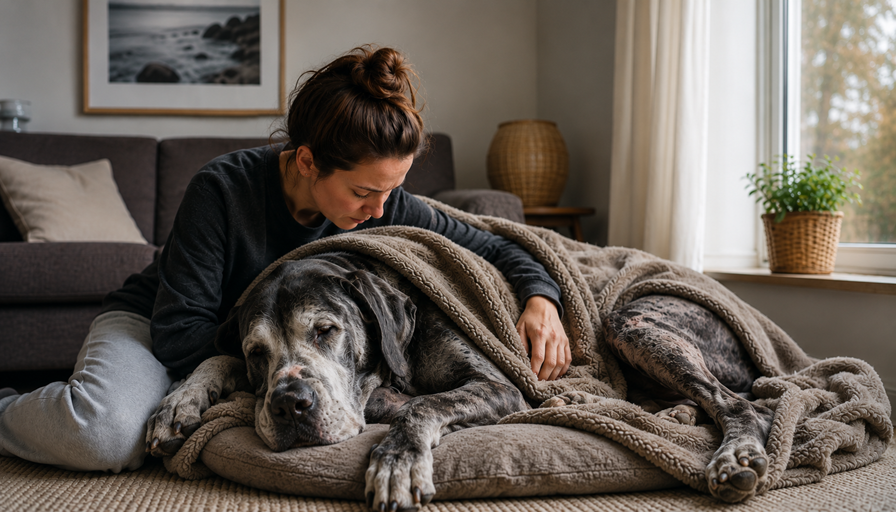
What Should You Do If Your Large Dog Passes Away at Home?
If your large dog passes away at home, contact your veterinarian or an emergency veterinary service first, especially if the death was unexpected or you are not completely certain that your dog has died. A veterinary professional can confirm what has happened, advise you on safe handling, and explain the available aftercare options.
Once your dog’s passing has been confirmed, keep them in a cool, quiet place while you arrange collection or transportation. Because a large dog can be difficult and unsafe to move alone, ask another adult for help or request professional home collection.
You do not need to choose an urn or permanent memorial immediately. The first steps are simply to seek professional guidance, care for your dog respectfully, and arrange suitable aftercare.
The First Steps to Take
- Contact a veterinarian if you are uncertain, if your dog died suddenly, or if poisoning, trauma, or illness may have been involved.
- Call your regular veterinary practice or a pet cremation provider to discuss collection, transportation, and aftercare.
- Keep the room cool and place a clean blanket or towel beneath or over your dog where this can be done safely.
- Do not try to lift a large dog by yourself. Ask another adult for assistance or arrange professional collection.
- Take a little time to say goodbye if circumstances allow. Permanent memorial decisions can be made later.

Contact a Veterinarian If You Have Any Doubt
A dog that appears unresponsive may still require emergency veterinary attention. Do not rely only on appearance, lack of movement, or your own attempt to detect breathing or a heartbeat.
Contact a veterinarian or emergency veterinary service immediately when:
- You are not completely certain that your dog has died.
- Your dog collapsed or became unresponsive suddenly.
- An accident, injury, poisoning, or heat exposure may have occurred.
- Your dog showed unusual symptoms before passing away.
- Other animals or people may have been exposed to a hazardous substance.
- You are unsure whether it is safe to touch or move your dog.
If the death was unexpected, the veterinarian may discuss whether an examination would be appropriate. This can sometimes help clarify the cause of death or identify a potential risk to other pets in the household.
Take a Moment Before Making Further Decisions
Once your dog’s passing has been confirmed and the immediate arrangements are under control, you may wish to spend a little time saying goodbye. Some families sit quietly beside their dog, allow close relatives to be present, or create a final photograph or paw print.
You may also wish to keep:
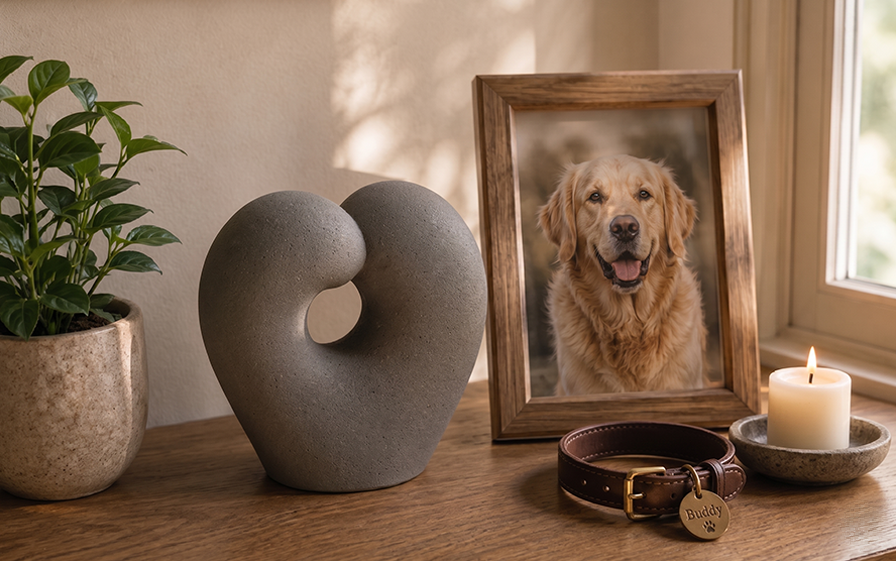
- A collar or identification tag
- A favourite blanket
- A clipping of fur
- A paw or nose print
- A favourite photograph
- A toy associated with special memories
These choices are entirely personal. There is no expectation that every family should create keepsakes or follow a particular farewell ritual.
Although you do not need to rush emotional or memorial decisions, contact a veterinarian or aftercare provider as soon as reasonably possible. They can explain how long collection may take and how your dog should be cared for in the meantime.
How to Care for Your Dog Before Collection
Your veterinarian or cremation provider should always be your main source of guidance. The appropriate steps may depend on the room temperature, the expected collection time, the circumstances of death, and the size of your dog.
Where it is safe and practical:
- Keep your dog in the coolest suitable room available.
- Lower the heating or use air conditioning if available.
- Place a clean blanket, towel, or waterproof layer beneath them.
- Cover them lightly with a clean blanket or sheet.
- Keep children and other pets away until you have decided how to involve them.
- Follow any additional instructions provided by the veterinarian or collection service.
If collection will be delayed, ask the professional arranging the aftercare whether any additional cooling measures are recommended. Do not improvise with methods that could damage flooring, make transportation more difficult, or cause distress to family members.
Moving a Large Dog Safely
A large or giant-breed dog can be too heavy for one person to move safely. Trying to lift your dog alone may cause injury to you or result in an undignified or difficult situation.
Whenever possible, arrange professional home collection. Many veterinary practices and independent pet cremation providers have suitable vehicles, stretchers, lifting equipment, or trained staff.
If you need to move your dog a short distance:
- Ask at least one other capable adult to help.
- Use a strong blanket, sheet, or suitable stretcher as support.
- Keep the body as level and securely supported as possible.
- Move slowly and agree on each step before lifting.
- Avoid pulling or lifting your dog by the legs, collar, or tail.
- Stop if the weight or location makes the move unsafe.
For very large dogs, dogs on stairs, or dogs in confined spaces, it is usually better to wait for trained assistance.
Who Can Arrange Collection or Transportation?
Your regular veterinary practice is usually the best first point of contact. Outside normal opening hours, an emergency veterinary service may be able to advise you or direct you to an appropriate provider.
You can also contact an independent pet cremation provider directly. Depending on the service and your location, they may be able to:
- Collect your dog from your home.
- Transport your dog from a veterinary practice.
- Explain individual and communal cremation.
- Confirm whether and how the ashes will be returned.
- Provide an estimated collection and cremation timescale.
- Explain identification and tracking procedures.
- Temporarily retain the ashes while you choose a memorial.
Before agreeing to a service, ask what is included, whether collection costs are separate, and how your dog will be identified throughout the process.
Understanding the Main Aftercare Options
The most common choices are individual cremation, communal cremation, or burial where this is legally and practically permitted.
Individual cremation
With an individual cremation, your dog is cremated separately and the ashes are returned to you. Ask the provider how individual cremations are organised, how identification is maintained, and in what type of temporary container the ashes will be supplied.
Once the ashes have been returned, you can decide whether to:
- Keep all the ashes in a full-size dog urn.
- Divide the ashes between several keepsake urns.
- Place a symbolic amount in memorial jewellery.
- Bury the ashes in a suitable urn.
- Scatter the ashes in a meaningful place where permitted.
- Combine more than one form of remembrance.
Communal cremation
During communal cremation, several pets are cremated together. The individual ashes are therefore not normally returned to the owner.
This may suit families who would like a respectful cremation but do not wish to retain the ashes. Ask the provider what happens to the communal ashes afterwards, as practices vary.
Home burial
Home burial rules depend on the country and area in which you live. The suitability of the land, property ownership, environmental conditions, and the circumstances of death may also be relevant.
Home burial in the United Kingdom
In England and Wales, a domestic pet such as a dog can generally be buried on land you own without applying for prior environmental permission. Different or additional conditions may apply in Scotland and Northern Ireland, and burial must not create a risk to people, animals, or the environment.
Check the current official guidance for your part of the UK before proceeding. If you rent the property or do not own the land, obtain the landowner’s permission first.
Home burial in the United States
In the United States, the rules can vary by state, county, municipality, and type of property. Rental agreements and homeowners’ association rules may also impose restrictions.
Contact your local authority, animal services department, or veterinarian before arranging a home burial. Do not assume that the rules in another city or state also apply where you live.
Pet cemetery or memorial ground
A pet cemetery may be an alternative when home burial is not permitted or does not feel suitable. Ask about available plots, burial containers, visiting arrangements, maintenance, memorials, and the long-term status of the site.
Questions to Ask a Pet Cremation Provider
Not all providers offer exactly the same services. Asking a few questions can help you understand what will happen and avoid uncertainty later.
- Do you offer home collection for a dog of this size?
- Is collection available outside normal working hours?
- Will my dog be cremated individually or communally?
- How is my dog identified throughout the process?
- When are the ashes normally returned?
- What temporary container will the ashes be supplied in?
- Can I provide my own urn before or after the cremation?
- Can you confirm the final volume of ashes?
- Are paw prints, fur clippings, or other keepsakes available?
- Which costs are included in the quoted price?
Choosing a Memorial Without Feeling Rushed
You do not need to choose a permanent memorial on the day your dog passes away. Cremated ashes are often returned in a temporary container, allowing you to consider the available options at your own pace.
Possible memorials include:
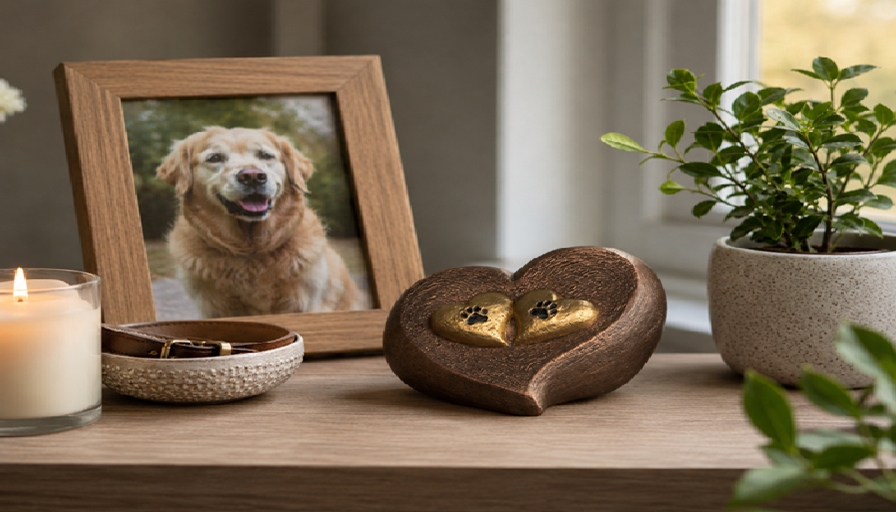
- A full-size dog urn for all the ashes
- A breed-specific or dog-shaped urn
- A wooden urn with a photograph or engraved name
- A small keepsake urn
- Memorial jewellery containing a symbolic amount of ashes
- An engraved plaque or memorial stone
- A memory box containing a collar, photograph, and paw print
- A biodegradable urn for burial
- A garden memorial where suitable and permitted
A memorial does not have to be elaborate. The most meaningful choice is usually the one that reflects your dog’s character and the relationship you shared.
Explore our complete collection of pet urns for ashes or view dog urns in different sizes, materials, and designs.

How to Choose the Correct Urn Size for a Large Dog
The urn must have enough internal capacity for the amount of ashes returned by the cremation provider. The external dimensions alone do not tell you how much an urn can hold, so always check the stated capacity in litres or cubic inches.
As a practical starting point, many providers allow approximately one cubic inch of urn capacity for each pound of healthy body weight before cremation. This is an estimate rather than a guarantee. The final amount can vary according to your dog’s build and the cremation process.
| Dog’s weight before cremation | Approximate minimum capacity |
|---|---|
| 50 lb / 23 kg | 50 cubic inches / approximately 0.8 litres |
| 75 lb / 34 kg | 75 cubic inches / approximately 1.2 litres |
| 100 lb / 45 kg | 100 cubic inches / approximately 1.6 litres |
| 125 lb / 57 kg | 125 cubic inches / approximately 2.0 litres |
| 150 lb / 68 kg | 150 cubic inches / approximately 2.5 litres |
| 175 lb / 79 kg | 175 cubic inches / approximately 2.9 litres |
| 200 lb / 91 kg | 200 cubic inches / approximately 3.3 litres |
Choose an urn with some additional capacity rather than one that matches the estimate exactly. Extra space can make filling easier and may allow room for an identification tag, collar tag, small letter, or other keepsake if desired.
The most reliable option is to ask the cremation provider for the actual volume of ashes before ordering. You can also use our pet urn size calculator or read the broader urn size guide.

Can a Large Dog’s Ashes Be Divided?
Yes. After an individual cremation, the ashes can usually be divided if that feels right for your family.
Some families choose to:
- Place most of the ashes in one main urn.
- Give smaller keepsake urns to different family members.
- Use a symbolic amount in memorial jewellery.
- Bury one portion and retain another at home.
- Scatter part of the ashes and preserve the remainder.
If you do not feel comfortable dividing or transferring the ashes yourself, ask the cremation provider, veterinarian, funeral professional, or urn supplier whether assistance is available.
Should Children Be Involved?
Children can often be involved in an age-appropriate way. What is suitable will depend on their age, understanding, relationship with the dog, and personal wishes.
Use clear and honest language. For younger children, words such as “died” and “dead” are generally less confusing than saying that the dog has “gone to sleep”, which may create fear or misunderstanding around ordinary sleep.
A child may wish to:
- Draw a picture.
- Write a letter or short message.
- Choose a favourite photograph.
- Add something to a memory box.
- Help select flowers or a memorial item.
- Attend a farewell where appropriate.
Do not pressure a child to view or touch the dog. Offer a choice, explain what they can expect, and respect their decision.
Supporting Other Pets in the Household
Other dogs and cats may notice that a companion is no longer present. Their response can vary. Some appear to search the home, sleep more, become quieter, seek additional attention, or show temporary changes in appetite.
You can support them by:
- Keeping feeding and walking times familiar.
- Providing calm attention without forcing interaction.
- Maintaining normal sleeping areas and household routines.
- Monitoring eating, drinking, toileting, and behaviour.
- Contacting a veterinarian if changes are severe or continue.
Whether another pet should be allowed to see or smell the dog after death is a personal decision. Ask your veterinarian for guidance, particularly if an infectious disease, poisoning, or traumatic injury may have been involved.
Common Concerns After a Dog Passes Away
Did I make the right decisions?
It is common to replay the final hours or days and question whether something should have been done differently. Try to remember the full lifetime of care, companionship, and safety you provided rather than judging your relationship only by its final moments.
If concerns about medical treatment or the cause of death are troubling you, discussing them with your veterinarian may provide clarity.
Should I keep the collar?
Many families keep a collar, tag, or favourite toy as part of a memory box or place it near an urn or photograph. Others donate suitable items to an animal charity. Neither choice is more correct than the other.
How soon must I choose an urn?
You can usually wait until the ashes have been returned and the required capacity is known. Ask the cremation provider whether they can retain the ashes safely if you need additional time.
What if my dog is too large for me to move?
Do not attempt an unsafe lift. Contact your veterinarian, emergency veterinary service, or pet cremation provider and ask specifically about home collection for a large or giant-breed dog.
What if my dog died unexpectedly?
Contact a veterinarian before arranging cremation or burial. Depending on the circumstances, they may recommend an examination, particularly when trauma, poisoning, infectious illness, or an unexplained sudden death is suspected.
Planning Ahead for an Elderly or Seriously Ill Dog
Planning for aftercare while your dog is still alive can feel uncomfortable, but it may reduce uncertainty during a very emotional moment.
You might discuss:
- Who to contact during and outside normal working hours.
- Whether home euthanasia is available in your area.
- How a large dog would be collected from your home.
- Whether you prefer individual or communal cremation.
- Whether you would like the ashes returned.
- The approximate costs and payment arrangements.
- Whether you would like a paw print or fur clipping.
- Whether a particular family member should be contacted.
Writing down these preferences does not commit you to a final decision. It simply gives you a practical starting point when clear thinking may be difficult.

Frequently Asked Questions
How long can a large dog remain at home after passing away?
There is no single safe period that applies in every situation. Room temperature, weather, body size, cause of death, and collection arrangements all matter. Contact a veterinarian or cremation provider promptly and follow their advice on temporary care and collection.
Who should I call if my dog dies at night?
Call an emergency veterinary service or an after-hours pet cremation provider. Your regular veterinary practice may have a recorded message directing you to the appropriate local service.
Can I transport my large dog in my own vehicle?
This may be possible, but consider the weight of your dog, safe lifting, the size of the vehicle, travel distance, temperature, and the cremation provider’s instructions. Use a strong waterproof layer and secure support, and never attempt to lift a large dog alone.
Can I bury my large dog in my garden?
This depends on where you live, whether you own the property, local environmental rules, and the circumstances of death. Check current local guidance before making arrangements. A veterinarian can often direct you to the relevant authority.
What is the difference between individual and communal cremation?
Individual cremation allows your dog’s ashes to be returned. With communal cremation, several pets are cremated together and individual ashes are not normally returned.
How much does cremation for a large dog cost?
Costs vary according to your location, your dog’s weight, collection requirements, the type of cremation, and any additional keepsake or memorial services. Request a written explanation of what is included before confirming the arrangements.
How do I know which urn size I need?
Use your dog’s healthy weight before cremation as an initial guide, but ask the cremation provider for the actual volume whenever possible. Select an urn with a little additional capacity rather than choosing one that may be too small.
Can I buy an urn after the ashes have been returned?
Yes. Ashes are commonly returned in a temporary container, so you can choose a permanent urn later. This also allows you to confirm the required capacity before ordering.
Can the cremation provider place the ashes in my chosen urn?
Many providers can do this, but policies vary. Ask whether you may supply an urn before the cremation or return later with the urn you have chosen.
A Calm and Respectful Farewell
The practical arrangements after the death of a large dog can feel daunting, particularly when moving or transporting your companion requires additional help. Taking the process one step at a time can make it more manageable.
Begin by contacting a veterinarian, arranging respectful aftercare, and accepting help with transportation. Decisions about urns, keepsakes, memorial jewellery, or other forms of remembrance can wait until you have had time to consider what feels right.
Whether you choose cremation, burial, or another meaningful farewell, the memorial does not define the bond you shared. It simply provides a place or object through which that bond can continue to be remembered.
Do you have a question about the correct urn size or the available memorial options for your dog? Please contact us through the legendURN contact form. We will be pleased to help you consider the possibilities without pressure.