Choosing Words for a Lasting Memorial Tribute
A memorial inscription is a short piece of text engraved on a cremation urn, keepsake, memorial jewellery item, plaque, or monument. It may include a name, important dates, and a few personal words that reflect the life, character, or relationships of the person being remembered.
The most meaningful inscriptions are rarely the longest. A simple phrase can express love, gratitude, faith, humour, or remembrance more powerfully than several lines of text.
A good memorial inscription is personal, easy to read, and meaningful for years to come. It often combines the person's name with important dates and one short dedication, quotation, or expression of love.
What Can Be Included in a Memorial Inscription?
There are no fixed rules for writing a memorial inscription. Depending on the available engraving space and the type of memorial, you may choose to include:
- The person's full name or familiar name
- Their date of birth and date of passing
- A short personal dedication
- A description of their role within the family
- A favourite saying or quotation
- A religious or spiritual verse
- A word that reflects their character
- A small engraved symbol
Not every inscription needs all of these elements. Sometimes a name, two dates, and a few carefully chosen words are enough to create a deeply personal tribute.
Begin With the Person, Not With a Quotation
Many people begin by searching for memorial quotes or engraving ideas. These examples can provide inspiration, but the strongest inscriptions usually begin with memories of the person rather than with a ready-made phrase.
Before deciding on the wording, consider the following questions:
- How would family and friends describe this person?
- Which qualities made them special?
- What did they bring to the lives of others?
- Did they have a favourite saying, song, poem, or quotation?
- What brought them happiness?
- What should future generations know about them?
The answers may reveal a natural theme. Someone remembered for kindness may be honoured through words about compassion. A person who loved the outdoors may be remembered with imagery inspired by gardens, forests, stars, or the sea.
Memorial Inscription Ideas for Someone Special
The following examples can be used as inspiration or adapted to make them more personal.
For a mother
- Forever loved, forever missed
- Your love remains with us always
- A wonderful mother and a gentle soul
- Your kindness lives on in all of us
- A mother's love is never forgotten
- Always our mother, forever in our hearts
For a father
- Your strength continues to guide us
- A loving father and a loyal friend
- Forever remembered, forever respected
- Your wisdom remains with us
- A life of love, strength, and devotion
- Always our father, always our guide
For a husband, wife, or partner
- My love, my life, my always
- Together in love, even when apart
- Forever beside me
- Until we meet again
- A lifetime of love, a memory forever
- Your love will remain with me always
For a son or daughter
- Forever loved beyond words
- Your light will always shine
- Held in our hearts for all time
- A beautiful life, remembered with love
- You brought love into every day
- Always loved, always part of us
For a grandparent
- Your stories and love live on
- A lifetime of wisdom and kindness
- Forever remembered by every generation
- Your love shaped our family
- Precious memories, lovingly kept
- Always in our hearts and family stories
For a friend
- A true friend, never forgotten
- Your friendship was a lasting gift
- Thank you for the memories
- Your laughter remains with us
- A trusted friend and a beautiful soul
- Remembered with affection and gratitude
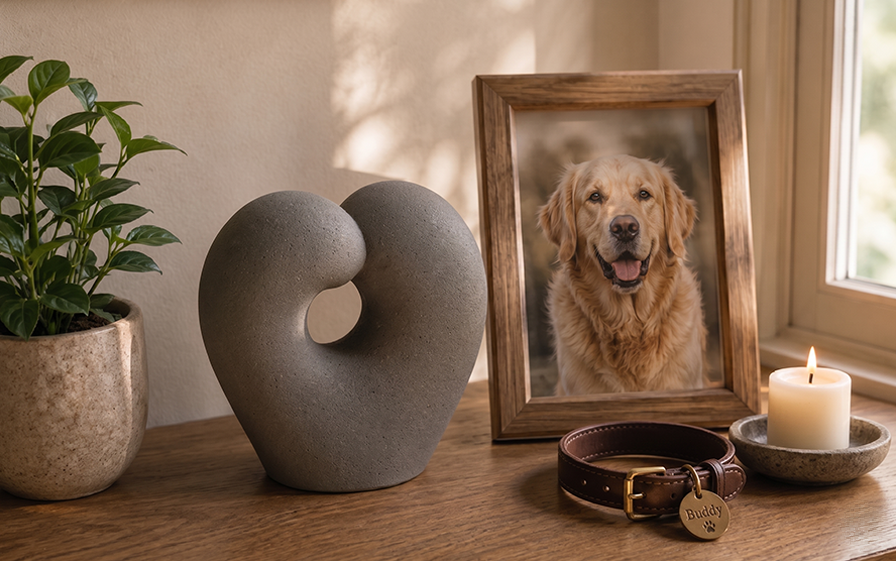
For a beloved pet
- Forever loved, never forgotten
- You left paw prints on our hearts
- A faithful friend and cherished companion
- Always by our side
- Small paws, precious memories
- Your love made our home complete
Different Styles of Memorial Inscriptions
An inscription does not have to follow a traditional format. The most appropriate style is the one that reflects the person and feels natural to those remembering them.
Simple and timeless
Short, understated wording can remain meaningful across generations.
- Forever in our hearts
- Always remembered
- Loved beyond words
- Your love lives on
- In cherished memory
- Never forgotten
- Remembered with love
- Forever part of us
Personal and descriptive
A personal inscription may describe the person's character, relationships, or influence on others.
- A loving father, devoted husband, and trusted friend
- Your kindness touched countless lives
- You filled every room with laughter
- Your wisdom continues to guide us
- A generous heart and a beautiful soul
- You made ordinary moments unforgettable
Religious and spiritual
For families whose faith is an important source of comfort, a short spiritual message or familiar verse may provide hope and reassurance.
- Safe in God's care
- The Lord is my shepherd
- Resting in eternal peace
- Until we meet again
- Held in everlasting love
- At peace in the arms of the Lord
Nature-inspired
Nature-inspired wording can be particularly meaningful for someone who loved gardens, animals, the countryside, the coast, or the changing seasons.
- Forever beneath the same stars
- Your memory blooms in every season
- At peace beside the sea
- Your spirit lives on in nature
- Gone from sight, present in every sunset
- Like a gentle breeze, always near
Words of gratitude
An inscription may also focus on thankfulness for the person's life and the time shared together.
- Thank you for a lifetime of love
- Grateful for every moment
- Your life was a gift to us
- Thank you for the love you gave
- A beautiful life, gratefully remembered
- Our memories of you will always be treasured
Match the Inscription to the Memorial
The type and size of the memorial will influence the appropriate length, layout, and level of detail.
Cremation urns
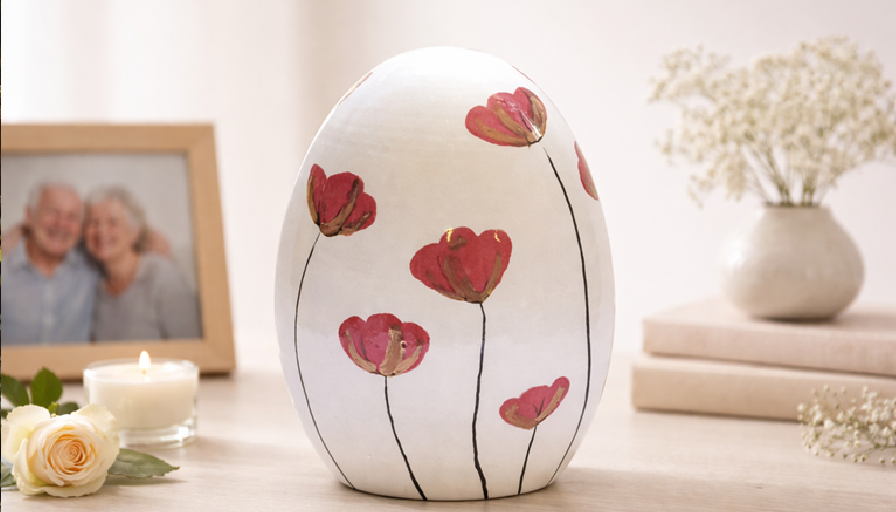
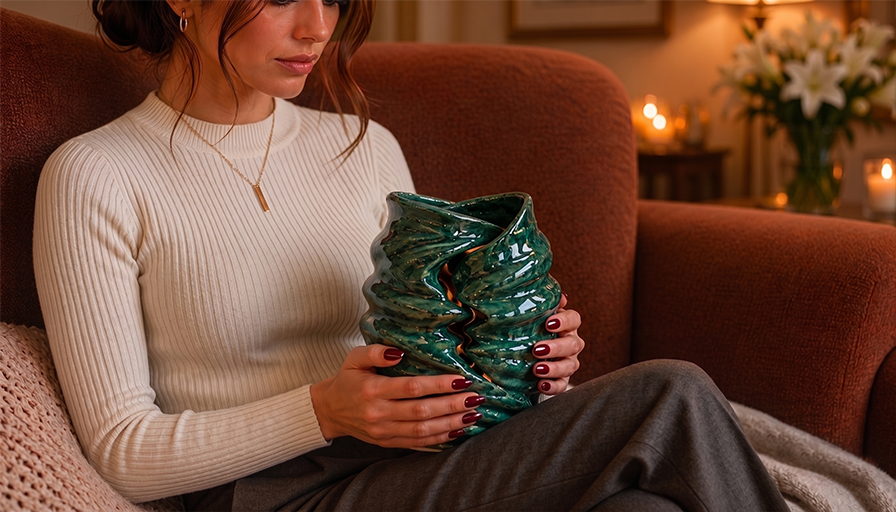
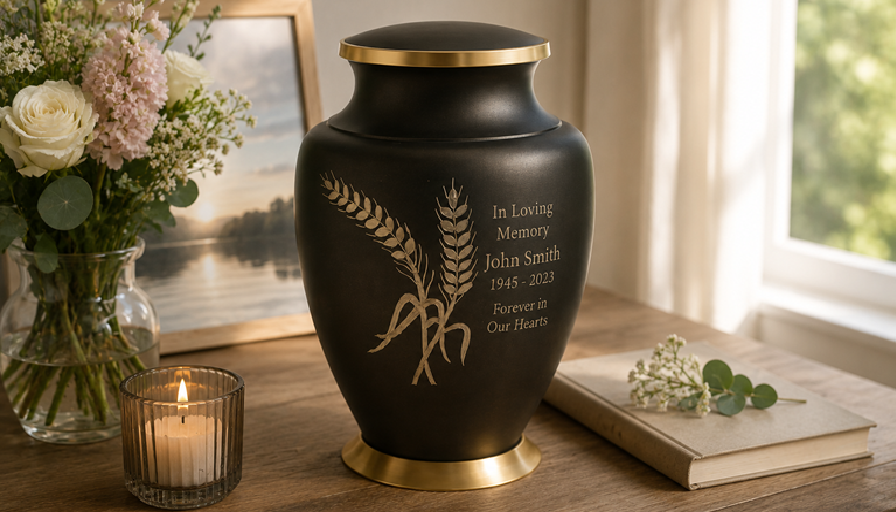
A full-size cremation urn will often have enough space for a name, dates, and a short personal dedication. Many families choose wording that reflects the person's whole life rather than only the sadness of the moment.
When selecting an urn, it is helpful to consider the engraving options at an early stage. The shape, material, colour, and available surface all affect how the final inscription will appear. Explore our collection of cremation urns to compare suitable styles and materials.
Keepsake urns
A keepsake urn is smaller and usually holds a symbolic portion of ashes. Because the available engraving space is limited, a name, date, initial, or very short phrase often creates the strongest result.
Cremation jewellery
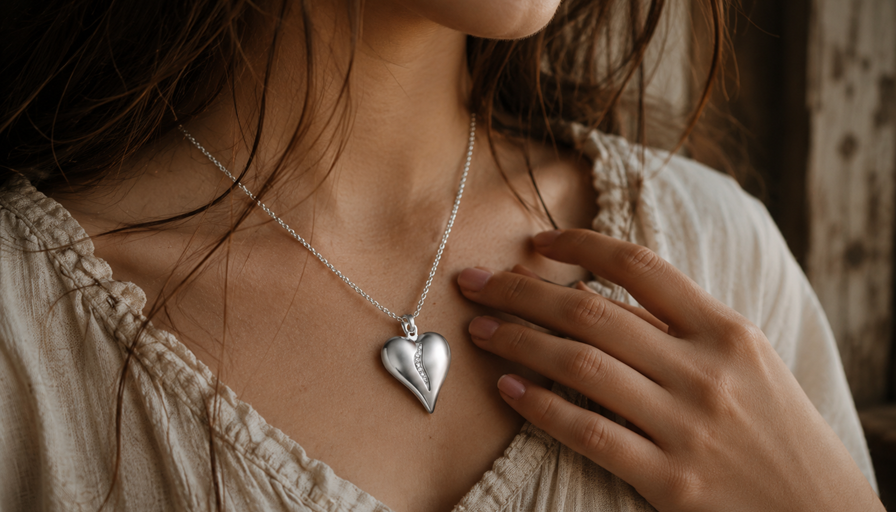
Pendants, rings, and bracelets generally offer only a small area for engraving. Initials, a meaningful date, a single word, or a brief expression of love are usually the most suitable choices.
Depending on the design, engraving may be placed on the front, reverse, inside, or along the edge of the jewellery. Discover our collection of cremation jewelry and review the personalisation possibilities for each item.
Memorial plaques and monuments
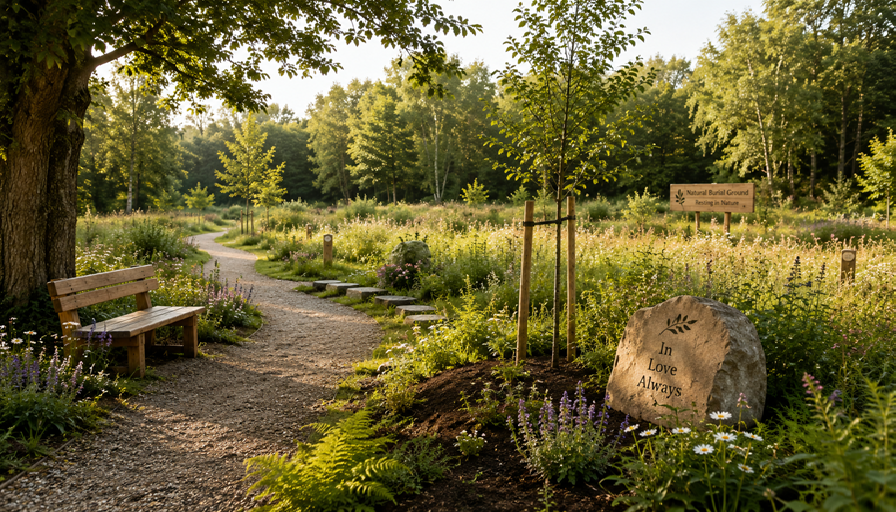
A plaque or larger monument may provide space for several lines, a longer quotation, a poem, or a religious verse. Even when more room is available, good spacing and readability remain important.
How Long Should a Memorial Inscription Be?
The ideal length depends on the memorial product, the available surface, the font, and the engraving method. Modern techniques can create very precise details, but fitting in more words does not always produce a better result.
| Memorial product | Suitable inscription |
|---|---|
| Cremation jewellery | Initials, one date, one word, or a very short phrase |
| Keepsake urn | A name, dates, or one short sentence |
| Full-size cremation urn | A name, dates, and a short personal dedication |
| Memorial plaque | Several lines, a quotation, poem, or family message |
| Monument or headstone | A longer inscription, subject to the design and local requirements |
These are general guidelines only. The precise possibilities vary by product and design. When available, request or carefully review an engraving proof before production. This allows you to check the size, positioning, line breaks, and overall balance of the text.
How to Write a Memorial Inscription Step by Step
Step 1: Write freely
Begin by noting memories, qualities, sayings, and emotions without worrying about the final length. At this stage, the goal is to gather meaningful ideas rather than to create a finished inscription.
Step 2: Look for a central theme
Read through your notes and identify recurring ideas. These may include family, generosity, courage, humour, music, travel, nature, faith, friendship, or devotion.
Step 3: Choose the most important message
Decide what the inscription should communicate above all else. Trying to express every memory within a few lines can make the wording feel crowded or unclear.
Step 4: Remove unnecessary words
The strongest inscriptions often become shorter during editing. Remove repeated ideas and keep only the words that add meaning.
Step 5: Read the inscription aloud
Reading the wording aloud can reveal awkward phrases, unintended repetition, or sentences that do not sound natural.
Step 6: Check the emotional tone
Ask whether the words reflect the person's life and character, rather than only the emotions felt immediately after the loss.
Step 7: Ask someone else to review it
When several relatives are involved, sharing the proposed inscription before engraving can help prevent misunderstandings and identify spelling or date errors.
Step 8: Review the final proof carefully
Before approving the engraving, check every name, date, capital letter, punctuation mark, and line break. Engraving on an urn or piece of jewellery is often permanent.

Can a Memorial Inscription Include Humour?
A gentle touch of humour can be appropriate when it genuinely reflects the person being remembered. A familiar saying, light-hearted family phrase, or characteristic remark may create a warm and authentic tribute.
Humour should not be included simply to make the inscription different. Consider how the wording will be understood by relatives, friends, and future generations. The best humorous inscriptions feel affectionate and recognisable rather than forced or insensitive.
Using Symbols Alongside an Inscription
An engraved symbol can communicate meaning without requiring additional text. It may also help balance the design or connect the inscription to the person's beliefs, interests, or character.
Common memorial symbols include:
- Hearts
- Doves
- Trees of life
- Angels
- Crosses
- Butterflies
- Stars or celestial motifs
- Roses, lilies, or other flowers
- Paw prints for a beloved pet
- Musical notes
- Leaves, branches, or waves
Not every design or material can accommodate every symbol. Always check the available engraving options before finalising the inscription.
Other Ways to Personalise a Memorial
Personalisation can extend beyond a traditional name, date, and dedication. Depending on the memorial product, material, and engraving method, it may be possible to include:
- A handwritten signature
- A short extract from a handwritten note
- A fingerprint
- A small line drawing
- Coordinates of a meaningful location
- A wedding or anniversary date
- A family motto
- Military service details
- A musical symbol
- A pet's name or paw print
These details can create a particularly close connection to the person being remembered. It is usually best to choose one or two personal elements rather than trying to include too many within a limited space.

Common Memorial Inscription Mistakes to Avoid
Trying to tell an entire life story
An inscription does not need to describe every part of a person's life. A few carefully chosen words often have greater emotional and visual impact.
Choosing wording that does not sound like the person
A quotation may be beautiful, but it may not feel appropriate if it does not reflect the individual's character, values, or relationships.
Writing only from the emotion of the moment
Intense emotions after a loss are entirely natural. However, an inscription becomes a lasting part of the memorial. Words centred on love, character, gratitude, and remembrance often remain meaningful for longer.
Using too many words
Overcrowding a small engraving area may make the inscription difficult to read. A shorter phrase with comfortable spacing will usually look more balanced.
Forgetting to check names and dates
Verify every detail against a reliable source. Pay particular attention to middle names, initials, date formats, punctuation, and the spelling of quotations.
Assuming every symbol or font is available
Engraving possibilities differ according to the material, surface, and production method. Confirm the practical options before choosing the final layout.
Will the Words Still Feel Right in the Future?
Before approving the inscription, imagine reading it again in ten or twenty years.
- Will the words still describe the person accurately?
- Will future generations understand their meaning?
- Does the inscription reflect the person's life and character?
- Will it bring comfort rather than uncertainty?
- Does it sound natural when spoken aloud?
An inscription that focuses on love, gratitude, character, and shared memories will often stand the test of time better than wording based only on immediate grief.
Frequently Asked Questions About Memorial Inscriptions
What should I write on a cremation urn?
A cremation urn inscription commonly includes the person's name, their dates, and a short personal message. Examples include “Forever in our hearts”, “Your love lives on”, or wording that describes their role within the family.
What is a good memorial inscription?
A good memorial inscription is brief, personal, and easy to understand. It should reflect the person being remembered and remain meaningful long after the memorial has been created.
Do I need to include both dates?
No. Some families include the full dates of birth and passing, while others use only the years, one important date, or no dates at all. The decision depends on personal preference and the available space.
Should I use a person's full name?
You may use a full legal name, a familiar name, a nickname, or a combination of these. Choose the form of the name by which the person was most meaningfully known.
How many words can be engraved on an urn?
The number of words depends on the urn's shape, material, available surface, font size, and engraving method. A full-size urn may accommodate a name, dates, and a short dedication, while smaller keepsakes usually require fewer words.
Can I use my own words instead of a traditional quotation?
Yes. Personal wording often creates the most meaningful tribute because it reflects genuine memories, relationships, and experiences.
Can a memorial inscription include a quotation or song title?
A short quotation, poem extract, verse, or song title may be suitable when it has a genuine connection to the person. Keep the available space and any copyright considerations in mind when using longer text.
Can the inscription be changed later?
This depends on the memorial and engraving method. A replaceable plaque may be changed, but engraving applied directly to an urn or piece of jewellery is generally permanent. Review the final proof carefully before production.
Should every family member agree on the wording?
Complete agreement is not always possible, but involving close relatives in the review process can help ensure that the inscription feels representative and reduce the chance of regret later.
Can symbols be engraved alongside the text?
In many cases, yes. Hearts, flowers, religious symbols, butterflies, trees, stars, paw prints, and other motifs may be possible depending on the material, design, and engraving space.
A Few Thoughtful Words Can Preserve a Lifetime of Memories
The right memorial inscription does not need to tell an entire life story. A name, a date, and a few carefully chosen words can preserve a feeling, relationship, or memory for generations.
Take time to consider the person's character, values, interests, and influence on others. Whether you choose a timeless phrase, a meaningful quotation, or your own personal words, the inscription should feel authentic to the individual it honours.
When choosing a cremation urn, keepsake, or piece of memorial jewellery, consider the engraving possibilities early in the process. This helps ensure that the wording, font, layout, and design come together as one balanced and personal tribute.
Do you have a question about engraving, available space, or personalisation? Please contact us through the legendURN contact form. We will be pleased to help you explore the available options.