
What should families know before choosing a funeral home in Pennsylvania?
Choosing a funeral home in Pennsylvania is not only about finding someone who can arrange a service. It is about choosing the people who will guide your family through transportation, paperwork, timing, care of the deceased, and the many practical decisions that follow a death. Most funeral homes can provide the same broad categories of service, but the experience can still differ greatly from one provider to another.
That is why families often discover important details only after they have started calling funeral homes. Some providers explain pricing clearly, others do not. Some are flexible and calm under pressure, others feel more rigid. Some make the practical steps easier to understand, while others leave families with more questions than answers. The points below can help you compare funeral homes in Pennsylvania more carefully, whether you are planning ahead or arranging everything after a recent loss.
1. Not every funeral home in Pennsylvania works in the same way
Many people assume that one funeral home will be broadly similar to the next. In practice, that is rarely true. The core services may sound alike on paper, but the way those services are delivered can vary in meaningful ways. One funeral home may communicate clearly and move through the process step by step, while another may feel rushed, vague, or overly package driven.
This difference becomes especially clear when families are deciding between burial, cremation, a formal funeral, a memorial gathering, or a simpler private arrangement. Some providers are very comfortable adapting to personal wishes, faith traditions, or non-traditional preferences. Others are better suited to more standard arrangements. For that reason, the best funeral home is not automatically the nearest one or the first one you call. It is the one that listens well, explains things properly, and helps your family make informed decisions.
2. Clear pricing matters more than families often realise
One of the biggest sources of stress is uncertainty about cost. Families are often trying to make careful decisions at a moment when they have limited time and little emotional space. That makes transparent pricing essential. In the United States, funeral homes must provide a General Price List when asked in person about funeral goods, services, or prices, and that list is one of the most useful tools you can ask for when comparing providers.
In Pennsylvania, asking for an itemised price list early can immediately make the process easier. It helps you see what is included, what is optional, and which charges belong to the funeral home itself versus third parties such as cemeteries or crematories. A total price on its own is not enough. Families need to understand what sits behind that total.
It is also wise to ask how estimates are structured. A careful funeral director should be able to explain professional service fees, transportation, preparation, facility use, merchandise, and outside costs in a way that makes sense. If the explanation stays vague, that is already useful information about how the provider operates.
3. You do not have to buy everything from the funeral home
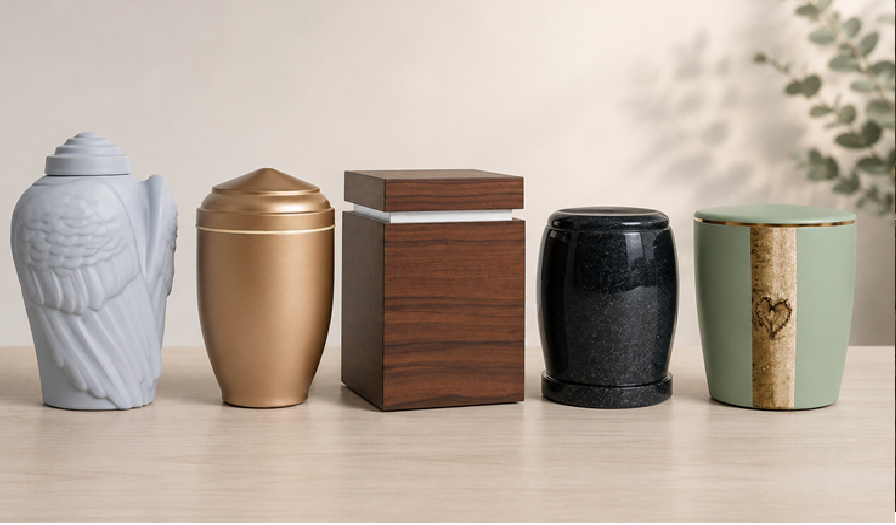
Many families do not realise how much freedom they still have when making arrangements. A funeral home may offer urns, memorial books, printed materials, keepsakes, and other items, but that does not mean every element has to be purchased there. In fact, some families prefer to arrange the funeral service through one provider and choose a more personal urn or memorial item elsewhere.
This matters because memorial choices often feel more personal than ceremonial logistics. A family may be satisfied with a simple cremation arrangement, but still want to take more time over the urn, a keepsake for relatives, or another object of remembrance that better fits the person being honoured. Knowing that these decisions do not all need to be made in one place can reduce pressure and create more room for thoughtful choices.
For many people, this is also where the emotional side of remembrance begins to feel more tangible. The funeral service may be temporary, but an urn or memorial object often remains part of daily life for years. That is one reason it is worth separating urgent practical decisions from longer-lasting memorial ones.
4. A good funeral director does much more than organise a ceremony
When families think about a funeral director, they often picture the visible part of the role, meeting relatives, overseeing a service, or handling a viewing. In reality, much of the value lies in what happens behind the scenes. In Pennsylvania, funeral directors are licensed professionals, and the practical competence they bring can shape how calm or confusing the entire process feels.
A strong funeral director does not only coordinate timings. They explain the next steps clearly, help families understand what decisions need to be made now and which can wait, and handle documentation and communication with care. They know how to guide the process rather than simply react to it.
This is why communication is such an important part of choosing a funeral home. Families should pay attention not only to whether someone sounds kind, but also to whether they sound organised, knowledgeable, and direct. Compassion matters, but clarity matters too. At a difficult moment, vague reassurance is not enough. Families need someone who can answer practical questions well.
5. Paperwork is part of the service, not an afterthought
One reason families often feel overwhelmed in the first days after a death is that the administrative side can arrive quickly. There may be forms, certificates, timing issues, and coordination between medical staff, the funeral home, and other institutions. In Pennsylvania, this paperwork is not a side issue. It is part of the core service families are relying on.
A capable funeral home should explain what documents are needed, who is responsible for what, and what the sequence of events will look like. That may include matters connected to the death record, death certificates, cremation authorisation where relevant, and coordination with a cemetery or crematory. Families do not need a legal lecture, but they do need a provider who can turn a confusing process into one that feels manageable.
This is particularly important when multiple relatives are involved in decisions, or when family members live in different locations. Good paperwork handling is often invisible when it goes well, but very noticeable when it does not.
6. A simpler service can still be deeply personal
Some families worry that choosing a simpler arrangement will make the farewell feel impersonal. In practice, that is often not true at all. A service does not need to be elaborate to feel meaningful. Many Pennsylvania families now choose a direct cremation, a small private gathering, or a memorial held later, while still creating a very personal tribute.
Meaning often comes from the details that genuinely fit the person being remembered. That may be a carefully chosen piece of music, a short reading, a display of photographs, a family gathering in a familiar setting, or a memorial object that remains with someone close. Personalisation is not about adding as much as possible. It is about choosing the elements that feel right and leaving out what does not.
That distinction matters when comparing funeral homes. A good provider will understand that personal does not always mean elaborate, and simple does not mean cold. Families should feel free to ask how flexible the funeral home is with smaller or less traditional arrangements.
7. Comparing just two funeral homes can change the quality of your decision
Families are sometimes hesitant to compare providers because the situation feels urgent, or because they worry it seems impersonal to ask questions about cost and service. In reality, even one extra conversation can make a major difference. The contrast between two funeral homes often reveals more than families expect.
One provider may answer questions patiently and send clear information without pressure. Another may give broad totals without explaining them, or move too quickly toward choices the family has not made yet. When you speak with more than one funeral home, you start to hear the difference between polished language and real guidance.
This does not mean families need to spend days researching. In many cases, a brief comparison of two local providers is enough to see where communication is better, where pricing is clearer, and where your wishes are being taken seriously. That small extra effort can prevent uncertainty later.
8. Location matters, but not always in the way families expect

Many people assume the right funeral home is simply the one closest to home. Sometimes that is true, but not always. In practice, the best location depends on where the death occurred, where the service will be held, where relatives are based, and whether burial or cremation arrangements are happening in another part of Pennsylvania.
A funeral home that is slightly farther away can still be the better choice if communication is stronger, scheduling is smoother, and the staff are easier to reach. This is especially true when family members are travelling from different towns or states, or when some decisions need to be handled by phone or email rather than in person.
It is often more useful to ask which funeral home is best positioned to support the way your family will actually organise the arrangements. In some situations, convenience means physical proximity. In others, it means better coordination, clearer communication, and less unnecessary stress.
Immediate steps if you need a funeral home now
If you are choosing a funeral home after a recent death, try to narrow your attention to the next few practical decisions rather than the entire process at once. Start by deciding which two or three funeral homes are realistic options based on location and the type of service you may want. Then call them and ask direct questions.
- Can you explain your pricing clearly and send an itemised list?
- Do you handle cremation directly or through another facility?
- Who will be our main point of contact?
- How do you handle timing, paperwork, and next steps?
- Can we choose our own urn or memorial item separately?
You do not need to have every answer before making that first call. It is enough to know the basic direction, burial or cremation, formal service or simpler arrangement, and whether there are any specific religious, cultural, or family wishes that need to be respected.
Planning ahead can make later decisions easier
Not every family is choosing a funeral home in the immediate aftermath of a death. Many people in Pennsylvania now compare providers in advance because they want to reduce uncertainty for their relatives. Planning ahead does not mean fixing every detail. Often, it simply means identifying the kind of service you would want, the budget range that feels reasonable, and the provider you believe would guide your family well.
Even a short written outline can help. It can note whether you prefer burial or cremation, whether you would want a viewing or a small private farewell, and whether you have wishes for music, readings, or memorial items. That kind of guidance does not remove emotion from the process. It reduces guesswork.

FAQ: Choosing a funeral home in Pennsylvania
How quickly do I need to choose a funeral home in Pennsylvania?
In many cases, a funeral home is contacted soon after death so transportation and immediate care can be arranged. Even so, families can often make one or two comparison calls before committing, especially if they stay focused on the most important questions first.
Do all funeral homes in Pennsylvania offer the same services?
No. Most offer the same broad categories, but they can differ in how they handle communication, cremation arrangements, scheduling, paperwork, and personal requests. The quality of guidance can vary just as much as the service menu.
Can I arrange cremation without a formal funeral service?
Yes. Many families choose direct cremation and hold a memorial later, or keep the farewell private and simple. A meaningful remembrance does not depend on a large formal service.
Can I bring my own urn or memorial item?
Yes. Families often choose to do this when they want something more personal, more suitable for the home, or better aligned with the person they are remembering.
Should I choose the nearest funeral home?
Not automatically. Convenience matters, but the best provider is often the one that communicates clearly, explains pricing properly, and can coordinate the arrangements in a way that suits your family.
What matters more, price or personal service?
Both matter. A lower price is not automatically better if communication is poor, and warmth alone is not enough if pricing stays unclear. The strongest choice is usually the provider that combines respect, clarity, and practical competence.
A careful choice can make a difficult process steadier
Choosing a funeral home in Pennsylvania is rarely only about the ceremony itself. It is about selecting the people who will help your family through decisions that are practical, emotional, and often unfamiliar all at once. That is why it helps to compare more carefully than many people first expect.
The right funeral home will not remove the sadness of the moment, but it can make the process clearer, steadier, and easier to carry. It can help your family understand the options, avoid unnecessary pressure, and make decisions with more confidence. If, after the service, you also want to explore a lasting and personal memorial, such as an urn or a smaller keepsake, it can be helpful to take a little more time with that choice as well.
If you feel certain information is missing or you have questions after reading this post, Please feel free to contact us via the contact form.